
Reports >
Life Sciences
>
Ai In Medical Devices

Ai In Medical Devices
Published Date: 21 April 2026 | Report Code: ai-in-medical-devices
Ai In Medical Devices Market Size, Share, Industry Trends and Forecast to 2033
This report covers a comprehensive analysis of the AI in Medical Devices market, providing a wide range of insights including market overview, size, CAGR, segmentation, regional dynamics, technological advancements, and product performance. The report also highlights the contributions of major industry players and forecasts trends from 2024 to 2033.
Key Takeaways
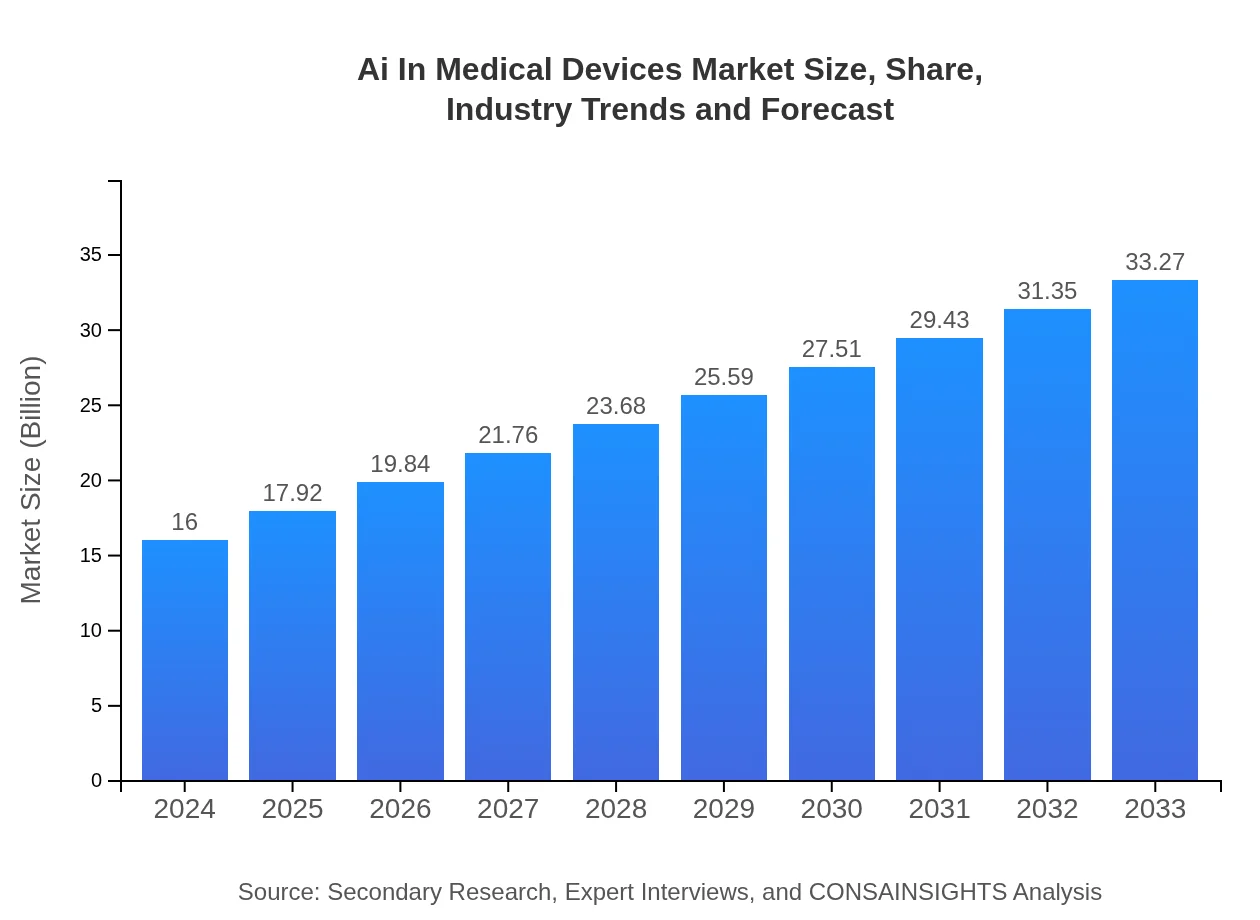
- Global value rising from $16.00 Billion to $33.27 Billion between 2024 and 2033, reflecting an 8.2% CAGR.
- North America is both the largest and fastest-growing market, starting at $6.23 Billion in 2024 and reaching $12.95 Billion in 2033.
- Europe and Asia Pacific show sizable expansion: Europe from $4.52 Billion to $9.39 Billion; Asia Pacific from $3 Billion to $6.23 Billion.
- Adoption spans hospitals, diagnostic laboratories, research institutes and homecare, driven by machine learning, NLP and computer vision.
- MedTech Innovations and HealthAI Solutions are notable participants advancing algorithm development and commercial deployments.
Ai In Medical Devices — Executive Summary
This report examines market dynamics for AI-enabled medical devices over the 2024 to 2033 horizon, where total value increases from $16.00 Billion to $33.27 Billion at an 8.2% CAGR. Growth is supported by heightened R&D, regulatory milestones and technology maturation in machine learning, natural language processing and computer vision. Hospitals, diagnostic laboratories, research institutes and homecare settings are primary adopters, with applications concentrated in radiology, pathology, cardiology and orthopedics. Regional variation is significant: North America leads in scale and pace, while Europe and Asia Pacific record robust mid-term expansion. Competitive activity features strategic partnerships and product launches from firms such as MedTech Innovations and HealthAI Solutions. The analysis includes segmentation by end-user, technology, device type and application, and leverages expert interviews and secondary sources to validate trends.
Key Growth Drivers
- R&D investment and product innovation accelerating algorithm performance and device capabilities.
- Regulatory approvals and clearer guidance enabling clinical deployment and market entry for AI-driven solutions.
- Strategic collaborations between technology vendors and healthcare organizations expanding commercialization pathways.
- Rising clinical demand for improved diagnostic accuracy and patient safety promoting AI adoption across device categories.
- Increased availability of clinical data and analytics fueling enhancements in imaging, pathology and monitoring applications.
| Metric | Value |
|---|---|
| Study Period | 2024 - 2033 |
| 2024 Market Size | $16.00 Billion |
| CAGR (2024-2033) | 8.2% |
| 2033 Market Size | $33.27 Billion |
| Top Companies | MedTech Innovations, HealthAI Solutions |
| Last Modified Date | 21 April 2026 |
Ai In Medical Devices Market Overview
Customize Ai In Medical Devices market research report
- ✔ Get in-depth analysis of Ai In Medical Devices market size, growth, and forecasts.
- ✔ Understand Ai In Medical Devices's regional dynamics and industry-specific trends.
- ✔ Identify potential applications, end-user demand, and growth segments in Ai In Medical Devices
What is the Market Size & CAGR of Ai In Medical Devices market in 2024?
Ai In Medical Devices Industry Analysis
Ai In Medical Devices Market Segmentation and Scope
Tell us your focus area and get a customized research report.
Ai In Medical Devices Market Analysis Report by Region
Europe Ai In Medical Devices:
Europe is set to expand from $4.52 Billion in 2024 to $9.39 Billion in 2033. Growth is supported by increasing regulatory clarity, research funding, and healthcare providers integrating AI into radiology, pathology and cardiology workflows.Asia Pacific Ai In Medical Devices:
Asia Pacific increases from $3 Billion in 2024 to $6.23 Billion in 2033. Regional momentum arises from growing R&D activity, rising healthcare digitization and expanding deployment of imaging and diagnostic AI tools in hospitals and labs.North America Ai In Medical Devices:
North America is both the largest and the fastest-growing region, moving from $6.23 Billion in 2024 to $12.95 Billion in 2033. Local drivers include strong clinical adoption, vendor presence, regulatory pathways and sizable investment into AI-enabled diagnostics and monitoring solutions.South America Ai In Medical Devices:
Middle East & Africa Ai In Medical Devices:
Middle East and Africa expand from $1.94 Billion in 2024 to $4.03 Billion in 2033. Drivers include increasing investment in healthcare infrastructure, interest in AI for improving clinical accuracy, and collaborations that support device deployment.Tell us your focus area and get a customized research report.
Research Methodology
Ai In Medical Devices Market Analysis By Device Type
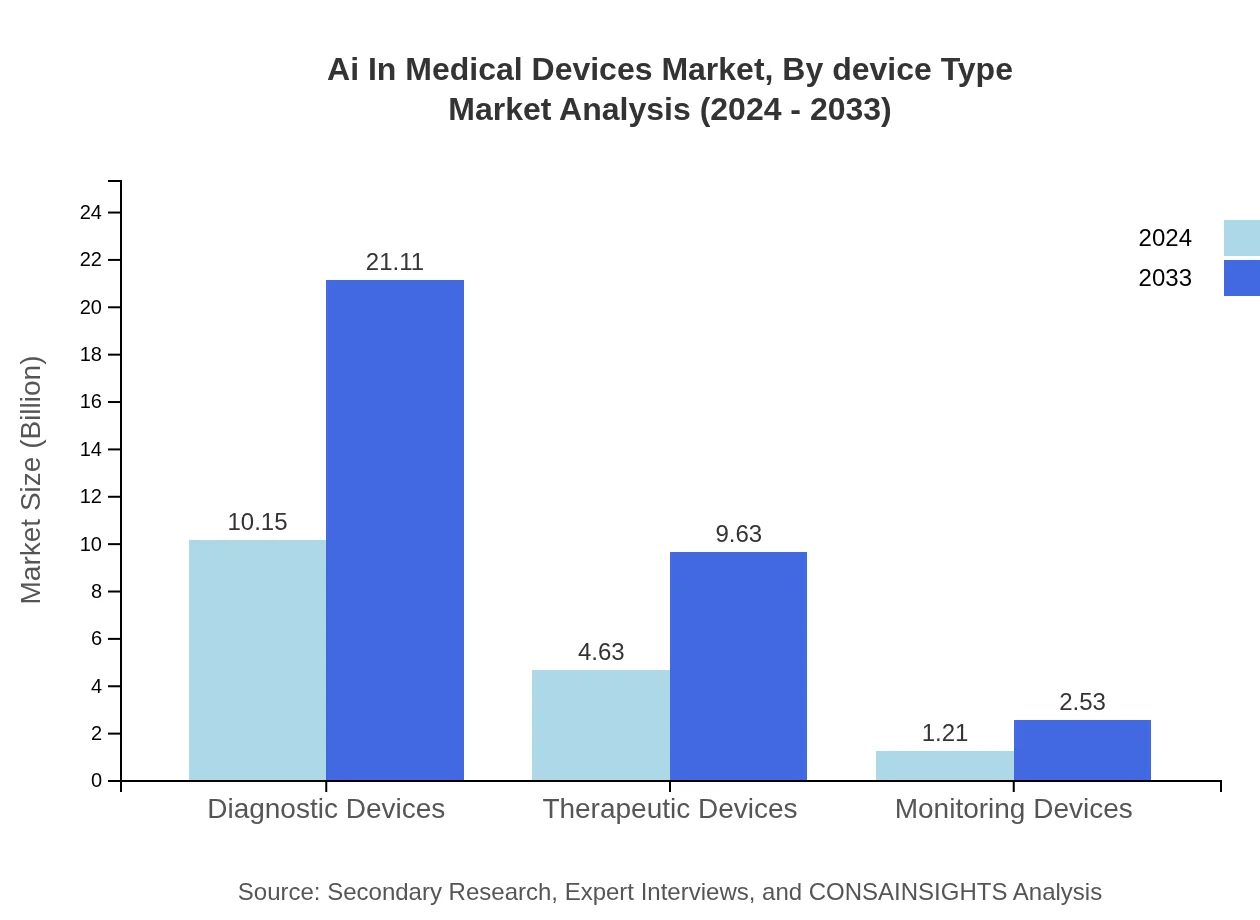
The AI in Medical Devices market by device type encompasses a diverse range of segments including diagnostic, therapeutic, and monitoring devices, along with radiological systems. For example, the radiology segment demonstrates significant market presence with values in hospitals rising from 8.54 in 2024 to 17.76 in 2033 and a consistent share of 53.37%. Diagnostic and therapeutic devices, driven by advanced computational models, are propelling growth through improved diagnostic accuracy and treatment precision. These devices are increasingly integrated with AI modules that leverage large datasets to offer predictive insights and reduce human error. The continuous evolution of medical imaging technologies and remote monitoring capabilities has further enhanced the utility of these devices, providing healthcare providers with actionable intelligence essential for patient management. Overall, innovation in device-specific applications continues to be a key determinant in market expansion and adoption.
Ai In Medical Devices Market Analysis By Technology
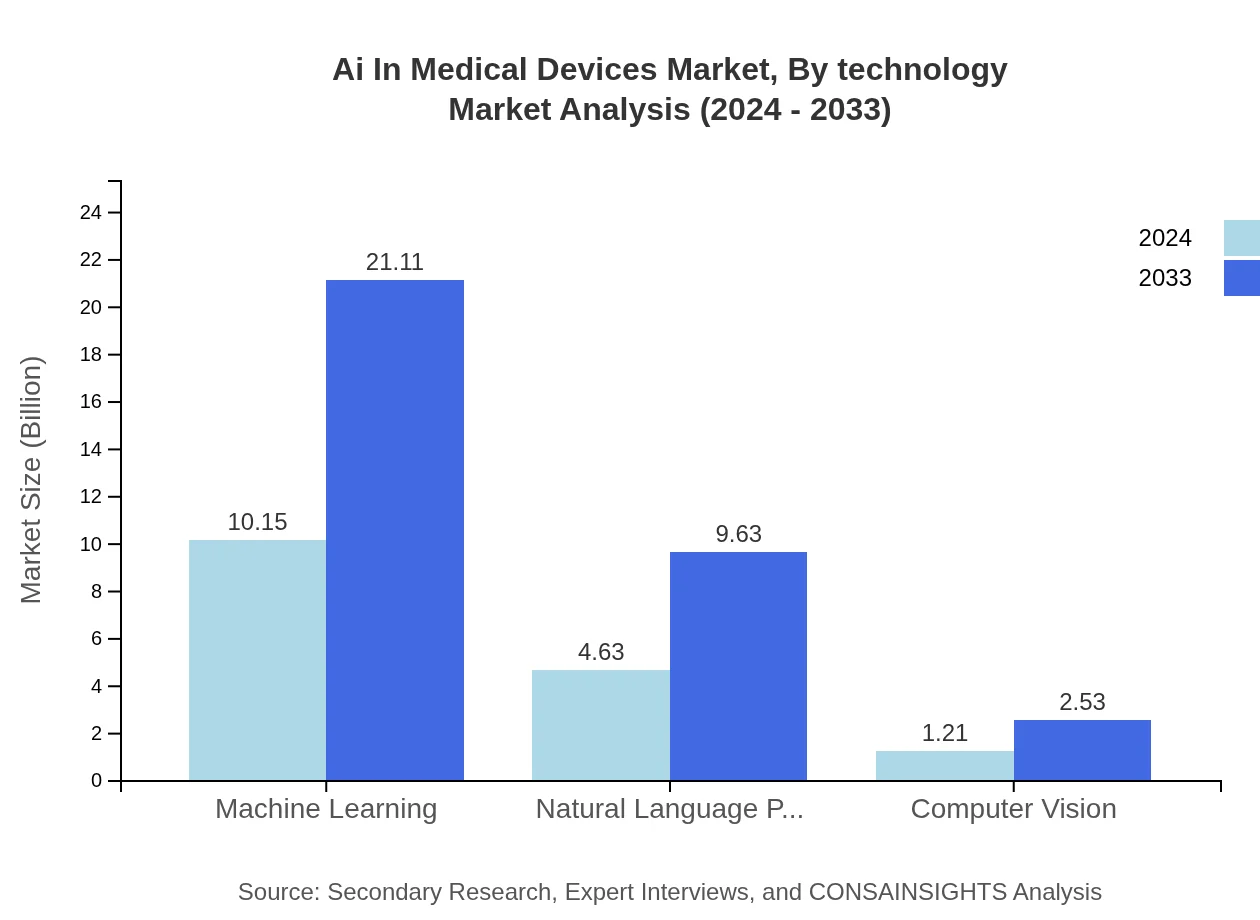
The by-technology segment of the market is driven primarily by breakthroughs in machine learning, natural language processing, and computer vision. Machine learning, in particular, is at the forefront, with market size values increasing from 10.15 in 2024 to 21.11 in 2033 while maintaining a dominant share of 63.45%. Natural language processing is also gaining traction, bolstered by its ability to interpret unstructured clinical data, enhancing decision-making processes. Computer vision, though smaller in scale, is pivotal in imaging diagnostics, helping to identify and analyze medical images with increasing accuracy. Collectively, these technologies are being incorporated into existing medical devices to enhance operational efficiency, accuracy, and predictive analytics. Their integration is setting new benchmarks in the industry and is expected to drive further market expansion, particularly as data processing capabilities and algorithmic performance continue to improve.
Ai In Medical Devices Market Analysis By Application Area
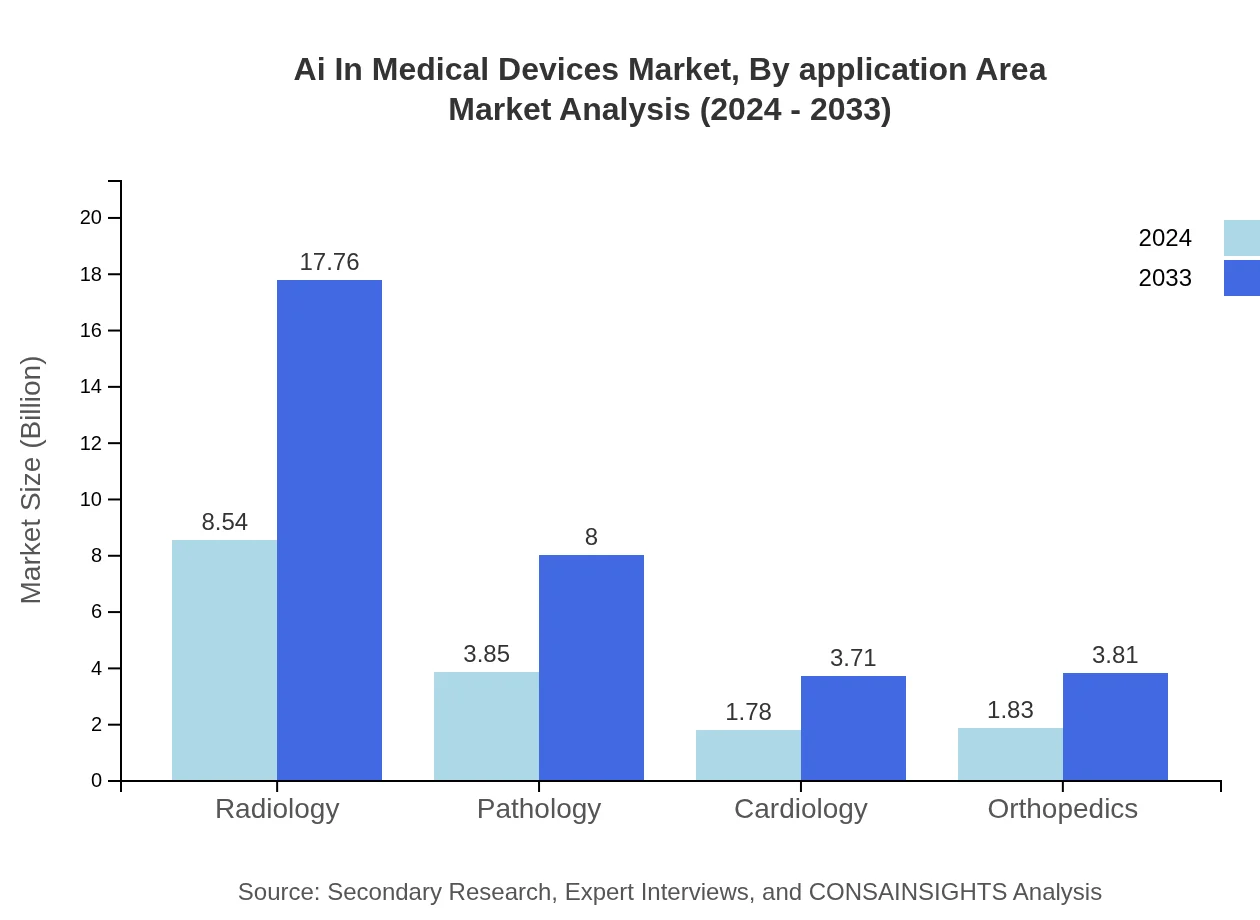
The application area segment highlights the diverse settings where AI in medical devices is making a substantial impact. Hospitals exhibit robust growth with market values increasing from 8.54 in 2024 to 17.76 in 2033 and capturing a significant market share of 53.37%. Diagnostic Laboratories show steady market performance with values rising from 3.85 to 8.00, reinforcing the importance of advanced diagnostics in clinical settings. Research Institutes, with market values expanding from 1.78 in 2024 to 3.71 in 2033, underscore the role of innovative research in driving technology adoption. Similarly, the homecare segment, which grew from 1.83 in 2024 to 3.81 in 2033, highlights the growing demand for remote monitoring and personalized healthcare solutions. Each of these application areas benefits from tailored AI solutions that not only streamline operational workflows but also improve patient outcomes and healthcare delivery efficiency.
Ai In Medical Devices Market Analysis By End User
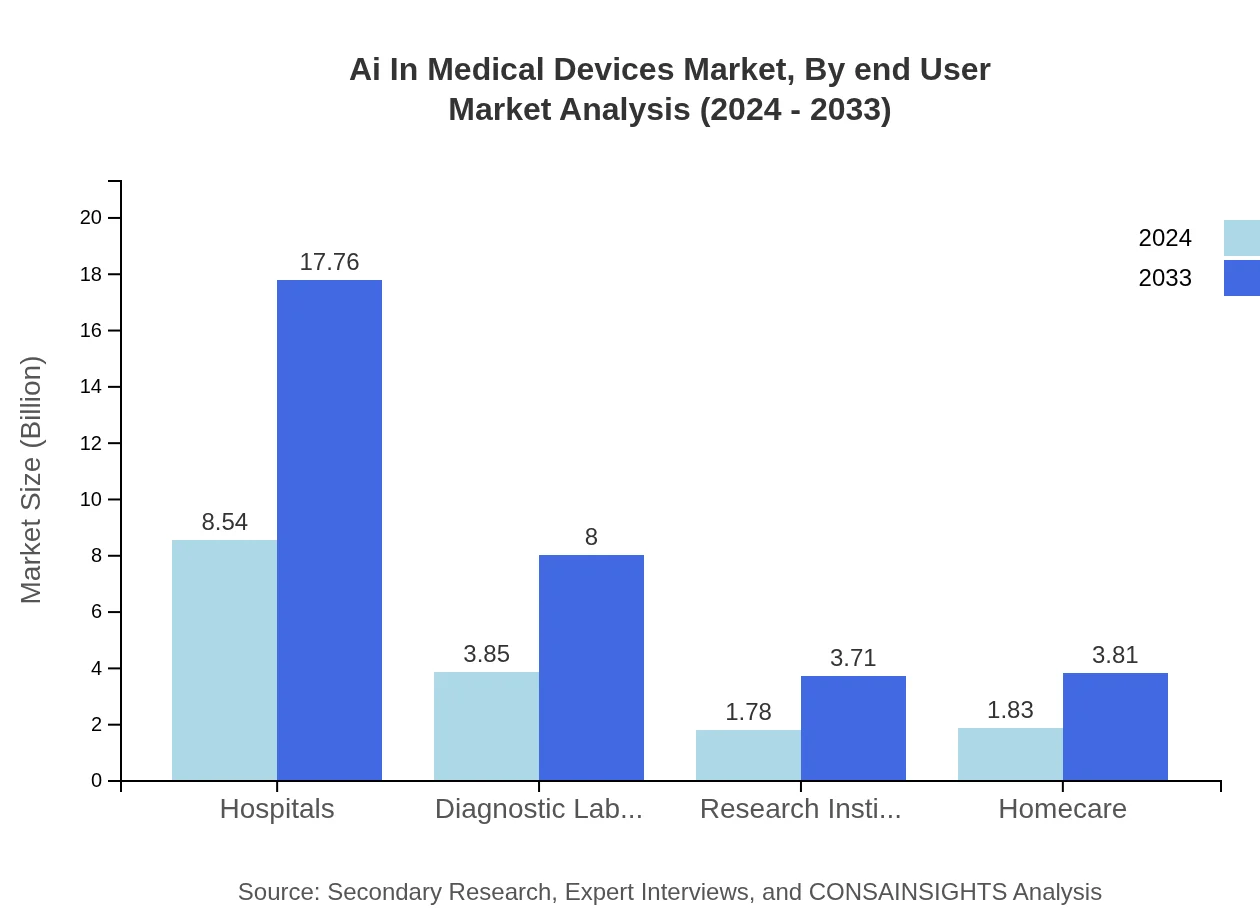
End-user segmentation in the AI in Medical Devices market focuses on the stakeholders who directly benefit from AI-driven innovations. Hospitals lead this segment, leveraging advanced diagnostic, therapeutic, and monitoring solutions to improve clinical outcomes and streamline healthcare delivery processes. Diagnostic laboratories and research institutes incorporate AI to enhance the accuracy of tests and streamline data analysis, while homecare settings adopt these technologies to provide continuous patient monitoring and personalized care. Across these segments, the consistent performance in market share, as evidenced by the stable percentages for hospitals, diagnostic laboratories, research institutes, and homecare sectors, indicates a balanced and sustainable growth trajectory. The integration of AI by end-users is instrumental in driving效率, reducing operational costs, and ultimately transforming the patient care experience.
Ai In Medical Devices Market Trends and Future Forecast
Tell us your focus area and get a customized research report.
Global Market Leaders and Top Companies in Ai In Medical Devices Industry
MedTech Innovations:
MedTech Innovations is at the forefront of integrating artificial intelligence with medical devices. The company has pioneered several breakthrough technologies that improve diagnostic accuracy and therapeutic outcomes. Its robust R&D framework and strategic collaborations with leading research institutions position it as a global leader in AI-driven healthcare solutions.HealthAI Solutions:
HealthAI Solutions specializes in developing innovative AI tools tailored for medical diagnostics and patient monitoring. The company has significantly contributed to enhancing the predictive accuracy of medical devices, enabling personalized treatment pathways across a variety of clinical settings. Their commitment to continuous innovation and quality has earned them a strong market presence worldwide.We're grateful to work with incredible clients.








FAQs
What is the size of the Ai In Medical Devices market?
The market size is $16.00 Billion in 2024 and is projected to reach $33.27 Billion by 2033, reflecting an 8.2% CAGR over the 2024 to 2033 forecast period.
How big is North America’s market?
North America is the largest and fastest-growing region, expanding from $6.23 Billion in 2024 to $12.95 Billion in 2033, driven by early clinical adoption and vendor activity.
Why is adoption increasing?
Adoption is rising due to increased R&D, regulatory progress and partnerships that enhance diagnostic accuracy, operational efficiency and patient safety across clinical and homecare settings.
Which companies lead the market?
Leading firms identified in the report include MedTech Innovations and HealthAI Solutions, noted for investments in algorithm development and deployments across diagnostic and monitoring device categories.
Who are the primary end Users?
Primary end-users include hospitals, diagnostic laboratories, research institutes and homecare providers, reflecting deployment across imaging, pathology, cardiology and orthopedics applications.
What is CAGR for the forecast period?
The forecast CAGR is 8.2% for the 2024 to 2033 period, reflecting compound annual growth driven by advances in machine learning, computer vision and natural language processing.
What are common technology types?
Core technology types in this market are Machine Learning, Natural Language Processing and Computer Vision, applied to diagnostic, therapeutic and monitoring devices to improve analysis and workflow automation.
How big is the Asia Pacific market?
Asia Pacific is forecast to grow from $3 Billion in 2024 to $6.23 Billion in 2033, supported by expanding clinical AI adoption, regional R&D and investment in imaging and diagnostic solutions.