
Reports >
Life Sciences
>
Ai In Medical Diagnosis

Ai In Medical Diagnosis
Published Date: 21 April 2026 | Report Code: ai-in-medical-diagnosis
Ai In Medical Diagnosis Market Size, Share, Industry Trends and Forecast to 2033
This comprehensive report on AI in Medical Diagnosis encapsulates significant insights into market trends, technological advancements, segmentation analysis, and regional variations from 2024 to 2033. It provides detailed data on market size, growth dynamics, applications, end-user trends, and competitive landscapes—highlighting forecasted metrics and emerging challenges in this fast-evolving sector.
Key Takeaways
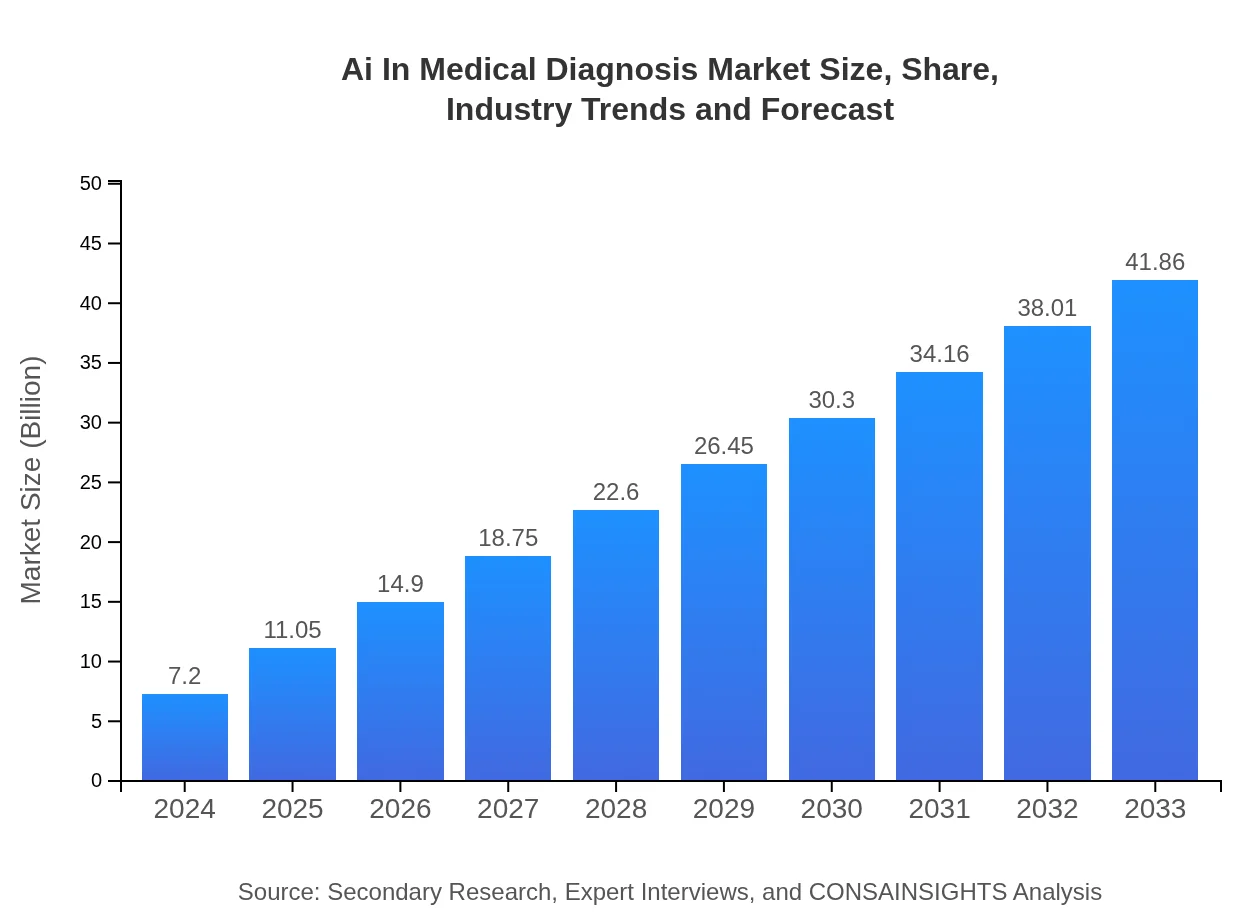
- Market value is projected to rise from $7.20 Billion to $41.86 Billion between 2024 and 2033, reflecting robust demand.
- The market is expected to grow at a 20.3% CAGR over the forecast period, driven by clinical adoption and investment.
- North America is both the largest market and the fastest-growing region, supported by advanced healthcare infrastructure and vendor activity.
- Key vendors include IBM Watson Health and Google Health, active in algorithm development and clinical partnerships.
- Primary challenges include data privacy, integration with legacy systems, and algorithmic fairness affecting deployment pace.
Ai In Medical Diagnosis — Executive Summary
This report examines the accelerating adoption of AI-enabled diagnostic tools across clinical settings, projecting expansion from $7.20 Billion to $41.86 Billion between 2024 and 2033 at a 20.3% CAGR. Growth is propelled by heightened demand for early disease detection, rising chronic disease prevalence, and the push for personalized treatment pathways. Technology improvements—spanning machine learning, NLP, robotics, imaging, pathology, and genomic testing—are expanding application areas such as oncology, cardiology, neurology, and orthopedics. Hospitals, diagnostic laboratories, clinics, and research institutes form the primary end-user base. However, deployment faces obstacles including data privacy concerns, system integration complexity, and bias mitigation. Major players such as IBM Watson Health and Google Health are advancing solutions through collaborations with healthcare organizations. The report outlines segmentation by application, diagnostic technique, technology, end user, and region, offering a structured view of market dynamics, competitive positioning, and implementation challenges to guide stakeholders and investors.
Key Growth Drivers
- Rising demand for earlier and more accurate disease detection increases adoption of AI diagnostic solutions.
- Growing prevalence of chronic conditions creates sustained need for scalable diagnostic and monitoring technologies.
- Investments and partnerships between technology firms and healthcare institutions accelerate product development and clinical validation.
- Improvements in imaging, genomics, and machine learning elevate diagnostic capability across oncology, cardiology, neurology, and orthopedics.
- Need for personalized treatment pathways motivates integration of AI tools into clinical decision-making workflows.
| Metric | Value |
|---|---|
| Study Period | 2024 - 2033 |
| 2024 Market Size | $7.20 Billion |
| CAGR (2024-2033) | 20.3% |
| 2033 Market Size | $41.86 Billion |
| Top Companies | IBM Watson Health, Google Health |
| Last Modified Date | 21 April 2026 |
Ai In Medical Diagnosis Market Overview
Customize Ai In Medical Diagnosis market research report
- ✔ Get in-depth analysis of Ai In Medical Diagnosis market size, growth, and forecasts.
- ✔ Understand Ai In Medical Diagnosis's regional dynamics and industry-specific trends.
- ✔ Identify potential applications, end-user demand, and growth segments in Ai In Medical Diagnosis
What is the Market Size & CAGR of Ai In Medical Diagnosis market in 2024?
Ai In Medical Diagnosis Industry Analysis
Ai In Medical Diagnosis Market Segmentation and Scope
Tell us your focus area and get a customized research report.
Ai In Medical Diagnosis Market Analysis Report by Region
Europe Ai In Medical Diagnosis:
Europe begins at $1.76 Billion in 2024 and reaches $10.24 Billion in 2033. Adoption is propelled by clinical research activity, regulatory attention to safety and data practices, and investments in diagnostic technology across healthcare systems.Asia Pacific Ai In Medical Diagnosis:
Asia Pacific moves from $1.56 Billion in 2024 to $9.07 Billion by 2033. Growth is driven by expanding healthcare access, increasing chronic disease burden, and rising interest in digital health solutions and clinical partnerships.North America Ai In Medical Diagnosis:
North America starts at $2.44 Billion in 2024 and grows to $14.17 Billion by 2033. The region’s advanced clinical infrastructure, strong vendor presence, and active partnerships contribute to rapid adoption, making it both the largest and fastest-growing market.South America Ai In Medical Diagnosis:
Middle East & Africa Ai In Medical Diagnosis:
Middle East and Africa grow from $0.98 Billion in 2024 to $5.7 Billion in 2033. Regional drivers include investments in healthcare infrastructure, partnerships for technology transfer, and increasing focus on improving diagnostic outcomes.Tell us your focus area and get a customized research report.
Research Methodology
Ai In Medical Diagnosis Market Analysis By Diagnostic Technique
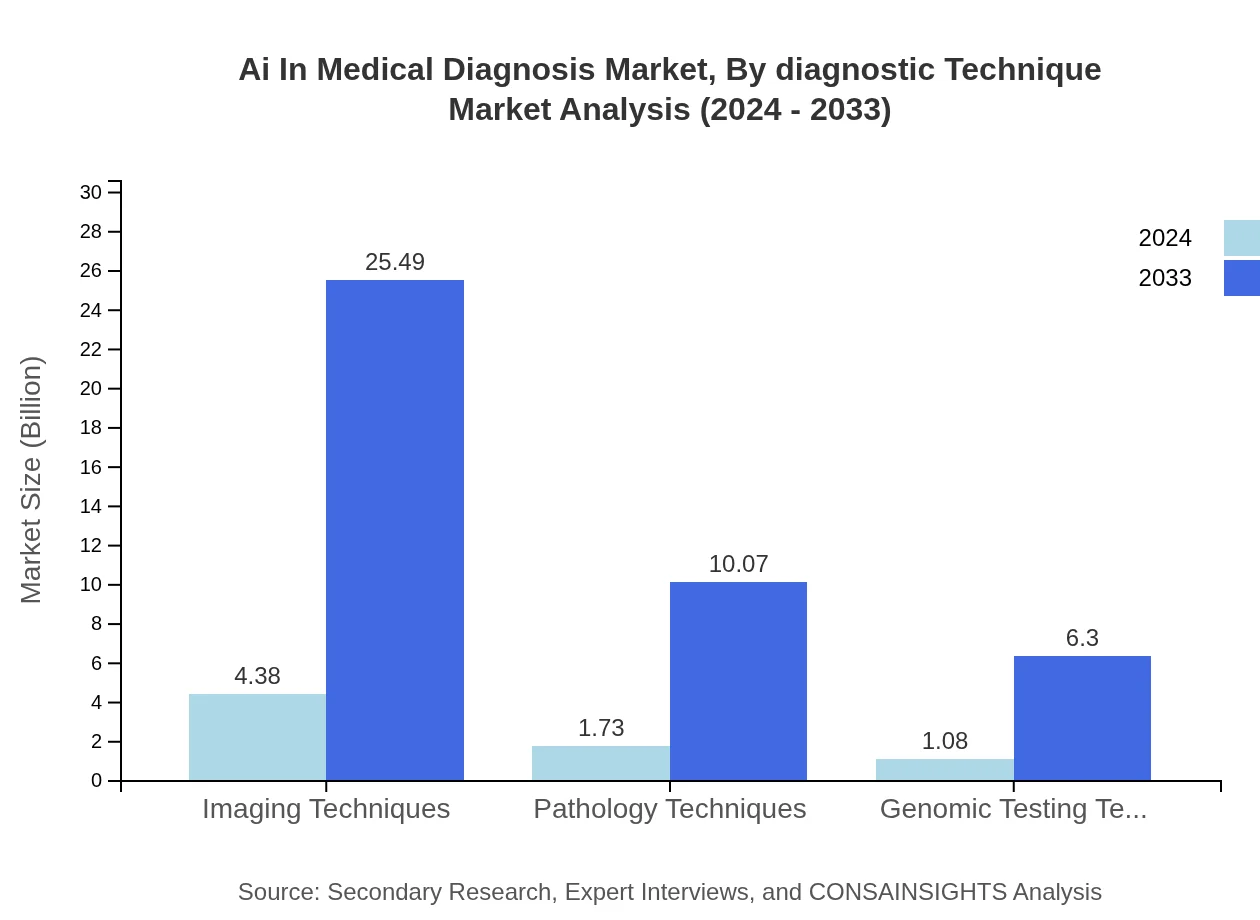
Focusing on diagnostic techniques, this segment covers machine learning, natural language processing, and robotic as well as imaging techniques. Detailed market insights indicate that advancements in these areas are revolutionizing diagnostic accuracy and speed. With size metrics showing significant growth projections, emphasis on reducing bias and enhancing data privacy continue to guide R&D efforts. As automated solutions improve system integration, they drive efficiency across healthcare facilities while addressing crucial challenges such as ethical AI deployment and clinical validation.
Ai In Medical Diagnosis Market Analysis By Application
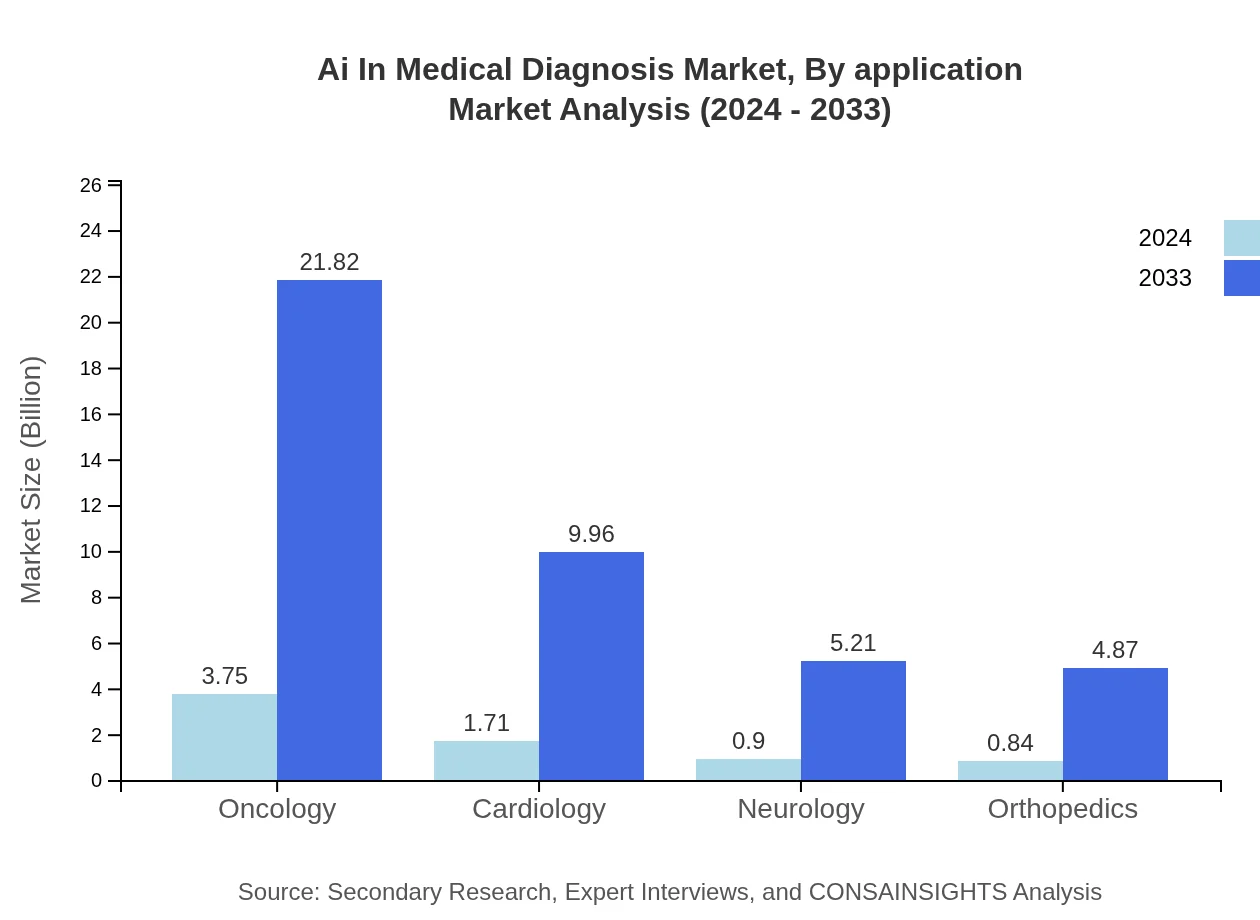
The application segment spans multiple medical specialties including oncology, cardiology, neurology, and orthopedics. Each area benefits uniquely from AI capabilities, where early detection and precise diagnostics are key. For example, in oncology, robust data analytics significantly improve screening accuracy, while in cardiology, AI tools enhance early detection of anomalies. This segment is characterized by an increased emphasis on personalized diagnostics and integration with clinical workflows, ensuring that AI applications continue to contribute to improved patient outcomes and operational efficiencies.
Ai In Medical Diagnosis Market Analysis By End User
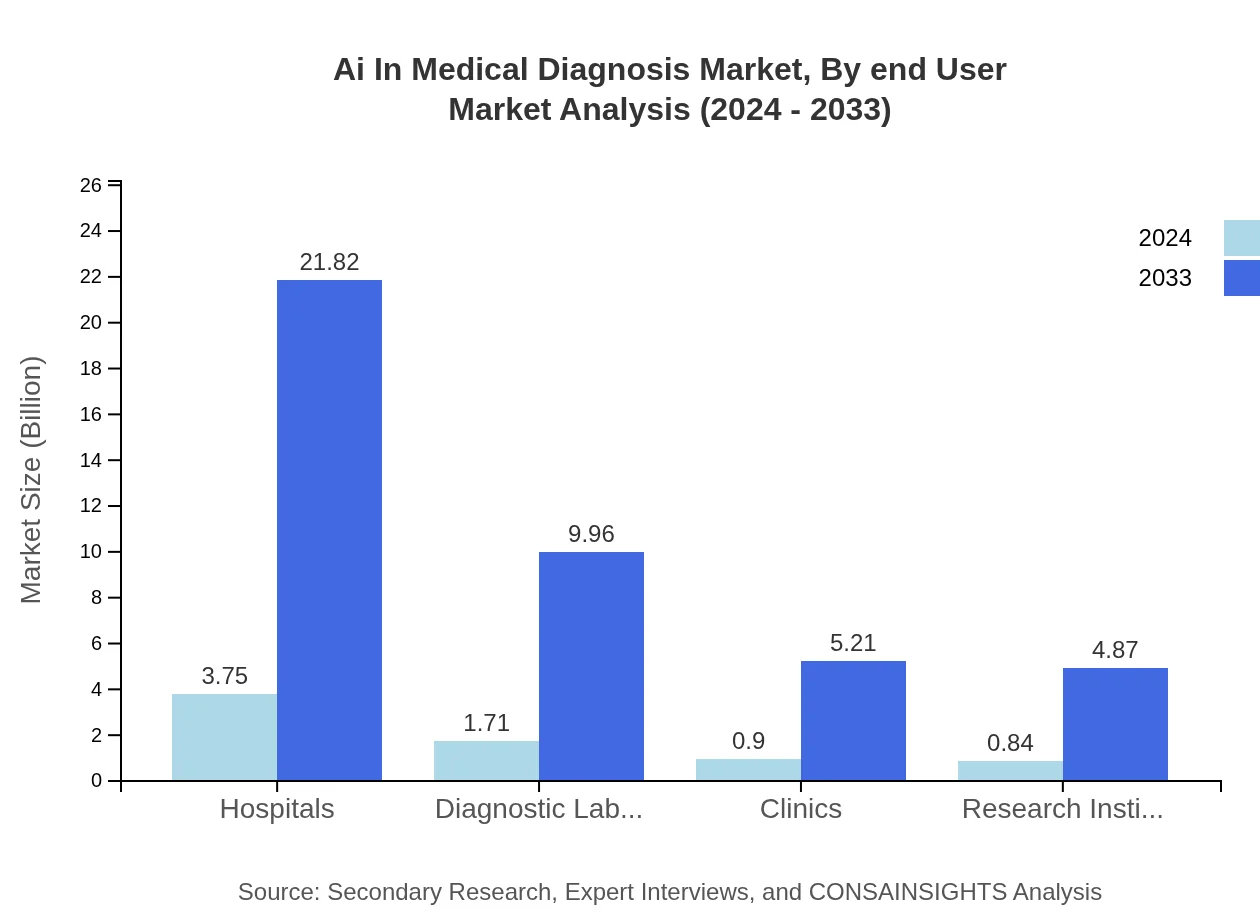
The end-user segment is critical in understanding market demand, comprising hospitals, diagnostic laboratories, clinics, and research institutes. Hospitals lead with high market shares, reflecting the integration of AI solutions into routine diagnostics and patient management. Laboratories and clinics are also rapidly adopting AI tools to increase operational efficiencies and improve diagnostic precision. Research institutes use AI not only as a tool for clinical evaluation but also for pioneering new diagnostic methodologies. Overall, each end-user category adapts AI-driven diagnostics to suit operational requirements while ensuring cost-effective and timely patient care.
Ai In Medical Diagnosis Market Analysis By Region Technology
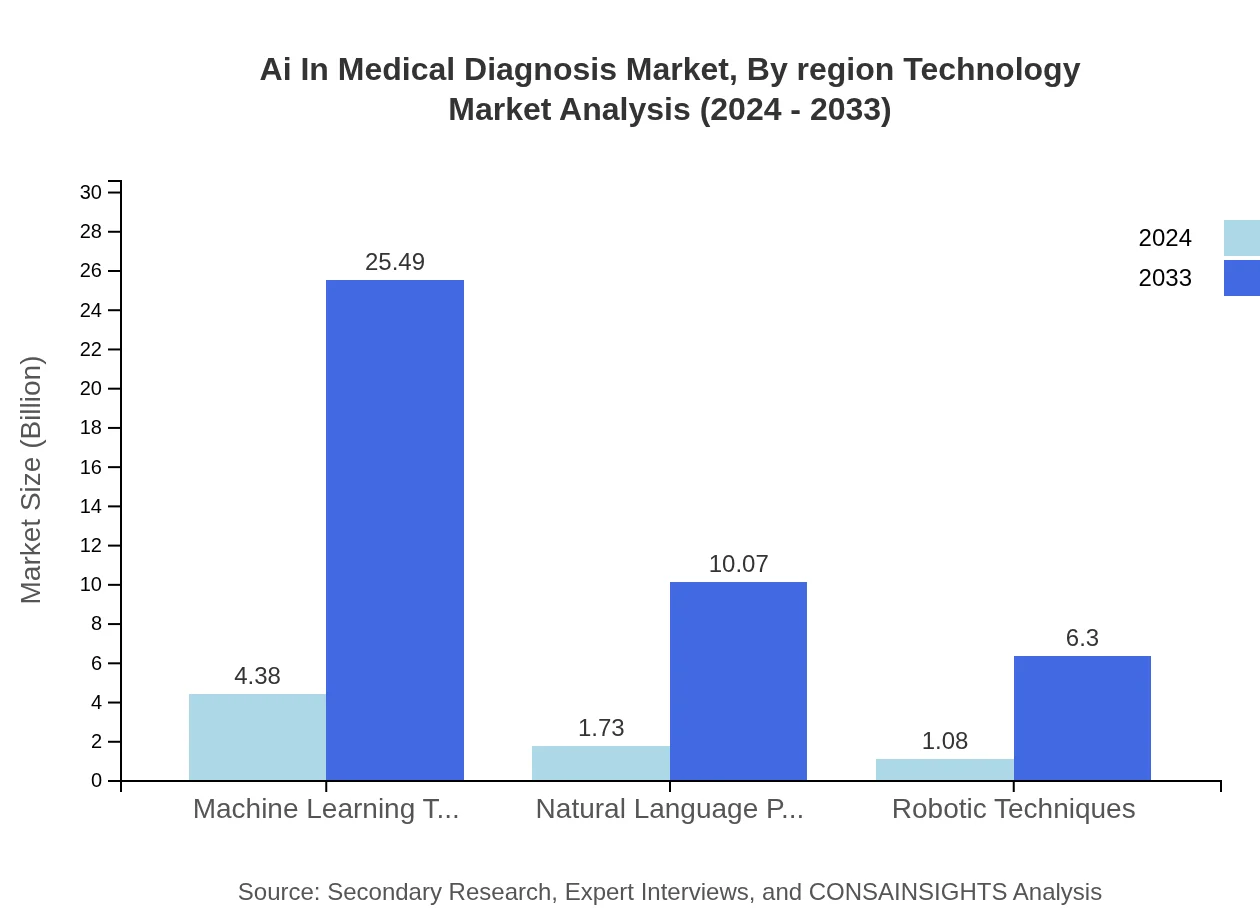
Regional technology analysis examines how localized innovations and infrastructure developments influence AI adoption in diagnostics. North America and Europe lead in integrating advanced imaging, machine learning, and genomic testing techniques. In contrast, emerging markets in Asia Pacific and the Middle East and Africa are rapidly modernizing their healthcare IT infrastructure to support these innovations. The blend of government incentives and private sector investments is catalyzing technological enhancements across regions, thereby improving diagnostic reliability and operational efficiency on a global scale.
Ai In Medical Diagnosis Market Analysis By Challenge
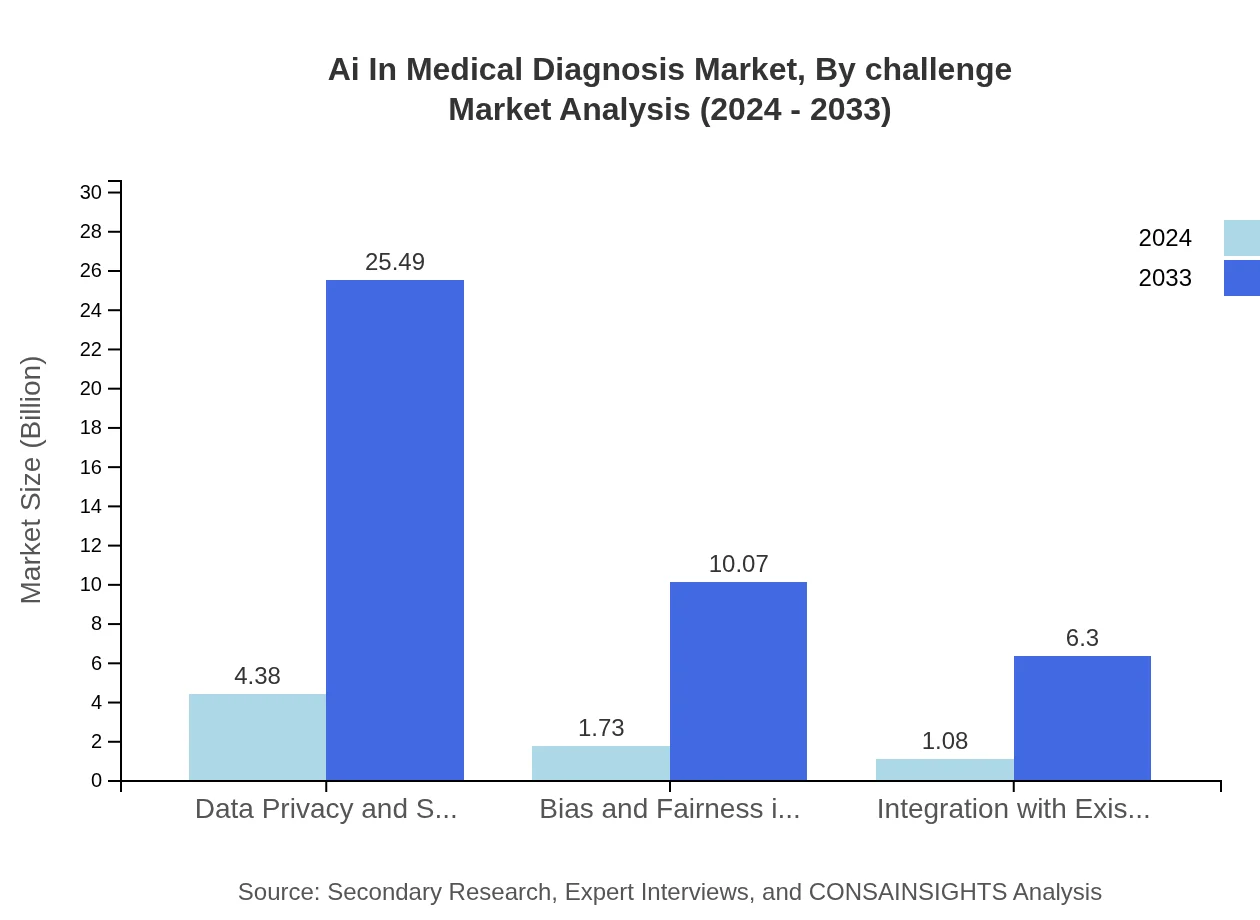
This segment addresses challenges such as data privacy, security, bias, and the integration of AI systems with legacy platforms. With regulatory compliance and ethical considerations at the forefront, companies are investing in robust security protocols and standardization measures. Challenges related to algorithmic fairness and clinical validation also require continuous attention. Industry stakeholders are actively collaborating to develop frameworks that mitigate these risks while ensuring the seamless integration of AI technologies into existing healthcare infrastructures. Tackling these challenges is essential for realizing the full potential of AI in diagnostic applications.
Ai In Medical Diagnosis Market Trends and Future Forecast
Tell us your focus area and get a customized research report.
Global Market Leaders and Top Companies in Ai In Medical Diagnosis Industry
IBM Watson Health:
IBM Watson Health has been at the forefront of combining big data analytics with AI-driven diagnostic tools. Their solutions harness the power of deep learning to interpret complex medical data, offering significant improvements in diagnostic precision and enabling healthcare providers to better predict patient outcomes. Strategic partnerships and continuous innovation remain central to their market leadership.Google Health:
Google Health leverages cutting-edge machine learning algorithms and vast computational resources to streamline diagnostic processes. Their platforms integrate data from multiple sources to provide accurate, real-time diagnostic support. By focusing on bridging the gap between data and actionable insights, Google Health has significantly advanced the field of AI diagnostics, making it a key player in the industry.We're grateful to work with incredible clients.








FAQs
What is the forecast period for the market?
The forecast period spans 2024 to 2033, covering anticipated technology adoption, regional expansion, and vendor activity driving market evolution over this interval.
How big is the market in 2024?
The market size in 2024 is $7.20 Billion, serving as the baseline for assessing growth patterns, regional performance, and vendor strategies during the forecast period.
How big will the market be in 2033?
By 2033 the market is projected to reach $41.86 Billion, reflecting cumulative expansion driven by broader clinical uptake and technology maturation across regions.
What is CAGR of the market?
The market is projected to grow at a 20.3% CAGR from 2024 to 2033, highlighting rapid year-on-year expansion driven by clinical demand and technological advances.
Why is North America significant for this market?
North America is the largest and fastest-growing region, supported by advanced healthcare infrastructure, strong vendor presence, and active clinical partnerships that accelerate solution adoption.
Which companies are identified as top players?
IBM Watson Health and Google Health are listed as top companies, noted for developing diagnostic algorithms, clinical collaborations, and scalable solution offerings in healthcare environments.
Who are the primary end users of diagnostic AI solutions?
Primary end users include hospitals, diagnostic laboratories, clinics, and research institutes, which adopt AI tools to enhance diagnostic accuracy and streamline clinical workflows.
What are the main deployment challenges?
Key challenges encompass data privacy and security, integration with existing systems, and managing algorithmic bias, all of which affect implementation timelines and regulatory compliance.
Why are imaging and genomic techniques important?
Imaging, pathology, and genomic testing techniques expand diagnostic capabilities, enabling more precise disease detection, treatment planning, and the development of tailored clinical solutions.
Which clinical areas see high AI application?
Oncology, cardiology, neurology, and orthopedics are highlighted as primary application areas, where AI assists in detection, risk stratification, and supporting treatment decisions.