
Reports >
Life Sciences
>
Ai In Medicine

Ai In Medicine
Published Date: 21 April 2026 | Report Code: ai-in-medicine
Ai In Medicine Market Size, Share, Industry Trends and Forecast to 2033
This comprehensive report on Ai In Medicine offers an in‐depth analysis of the market dynamics, trends, segmentation, and regional performance, along with valuable insights into technological and regulatory influences. Covering forecast data from 2024 to 2033, the report provides forecasts, key metrics, and detailed commentary to guide stakeholders in decision‐making.
Key Takeaways
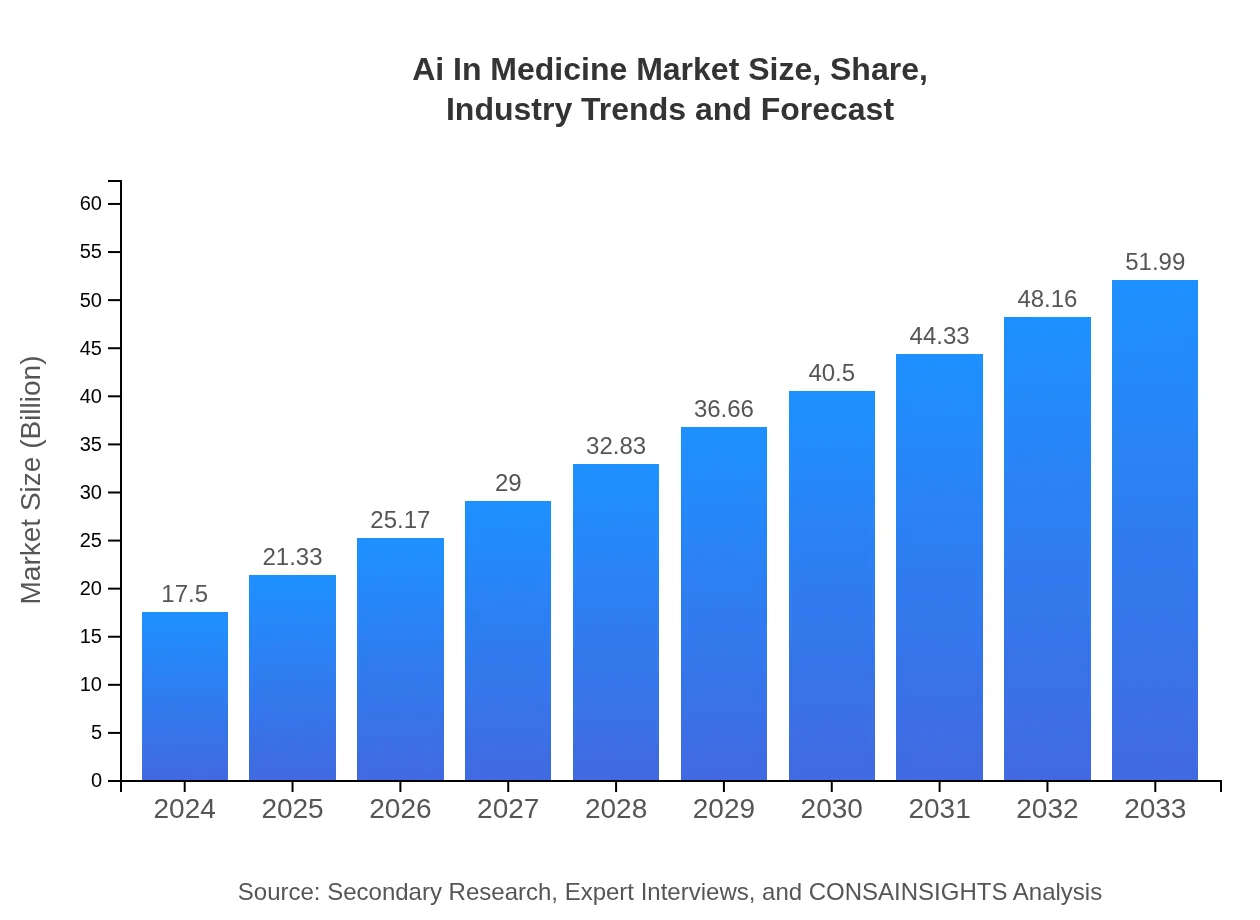
- Global value expands from $17.50 Billion to $51.99 Billion by 2033, reflecting a 12.3% compound annual growth rate over 2024 to 2033.
- North America leads the market and also records the fastest expansion, supported by extensive clinical and research deployment.
- Europe and Asia Pacific show sizable growth paths, with Europe moving from $4.86 Billion to $14.45 Billion and Asia Pacific from $3.32 Billion to $9.87 Billion.
- Hospital and clinic implementations, pharmaceutical and research institute use cases, and advancements in machine learning, NLP, computer vision, and robotics underpin market momentum.
- MedAI Innovations and HealthTech Dynamics are named among prominent providers shaping competitive offerings and product development.
Ai In Medicine — Executive Summary
The Ai In Medicine market demonstrates robust expansion driven by technological progress, rising clinical adoption, and increased investment from pharmaceutical and research organizations. Market valuation grows from $17.50 Billion to $51.99 Billion across the 2024 to 2033 forecast period at a 12.3% CAGR. Key growth enablers include advances in machine learning, natural language processing, computer vision, and robotics, together with growing utilization across hospitals, clinics, pharmaceutical companies, and research institutes. Regulatory emphasis on data privacy and approval pathways is shaping deployment timelines and product design. The report covers market sizing, segmentation by end-user, technology, application, and regulatory factors, regional splits highlighting North America, Europe, Asia Pacific, Latin America, and Middle East & Africa, and a competitive overview including MedAI Innovations and HealthTech Dynamics. Findings are intended to help stakeholders evaluate investment priorities, partnership opportunities, and product strategies amid evolving clinical and operational requirements.
Key Growth Drivers
- Wider clinical deployment in hospitals and clinics increases demand for diagnostic and treatment-focused AI solutions.
- Pharmaceutical companies and research institutes are investing in AI to accelerate drug discovery and personalized medicine initiatives.
- Technical progress in machine learning, natural language processing, computer vision, and robotics enhances solution capabilities and clinical utility.
- Growing emphasis on data privacy and streamlined approval processes encourages vendor investment in compliant, scalable platforms.
- Operational efficiency gains from automating administrative tasks and patient monitoring drive adoption across healthcare providers.
| Metric | Value |
|---|---|
| Study Period | 2024 - 2033 |
| 2024 Market Size | $17.50 Billion |
| CAGR (2024-2033) | 12.3% |
| 2033 Market Size | $51.99 Billion |
| Top Companies | MedAI Innovations, HealthTech Dynamics |
| Last Modified Date | 21 April 2026 |
Ai In Medicine Market Overview
Customize Ai In Medicine market research report
- ✔ Get in-depth analysis of Ai In Medicine market size, growth, and forecasts.
- ✔ Understand Ai In Medicine's regional dynamics and industry-specific trends.
- ✔ Identify potential applications, end-user demand, and growth segments in Ai In Medicine
What is the Market Size & CAGR of Ai In Medicine market in 2024?
Ai In Medicine Industry Analysis
Ai In Medicine Market Segmentation and Scope
Tell us your focus area and get a customized research report.
Ai In Medicine Market Analysis Report by Region
Europe Ai In Medicine:
Europe is projected to grow from $4.86 Billion in 2024 to $14.45 Billion in 2033. Regional growth is driven by healthcare provider adoption, research collaborations, and regulatory alignment emphasizing data privacy and safety that influence solution design and uptake.Asia Pacific Ai In Medicine:
Asia Pacific moves from $3.32 Billion in 2024 to $9.87 Billion in 2033. Growth reflects expanding healthcare capacity, rising investment in AI research and development, and increasing interest from hospitals, clinics, and pharmaceutical enterprises.North America Ai In Medicine:
North America is the largest and fastest-growing region, expanding from $6.7 Billion in 2024 to $19.9 Billion in 2033. Market leadership reflects concentrated clinical deployments, significant research and pharmaceutical activity, and strong investment in AI-enabled diagnostic and treatment tools.South America Ai In Medicine:
Middle East & Africa Ai In Medicine:
Middle East and Africa expand from $2.4 Billion in 2024 to $7.14 Billion in 2033. Regional momentum is attributed to investments in healthcare infrastructure, pilot programs in clinical settings, and growing collaboration with research institutes and industry vendors.Tell us your focus area and get a customized research report.
Research Methodology
Ai In Medicine Market Analysis By Application
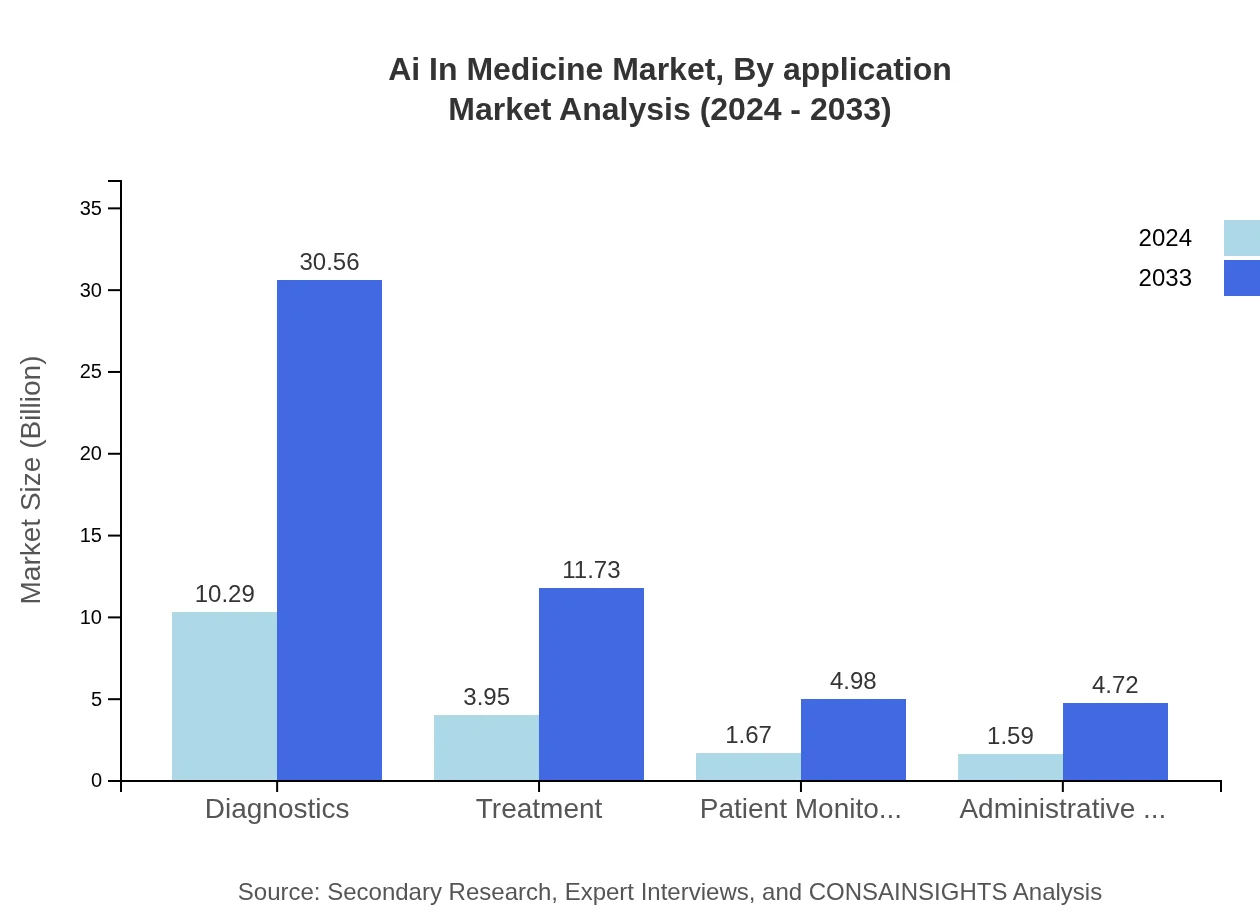
The application segment analysis of the Ai In Medicine market reveals detailed insights into the roles played by various healthcare settings. Hospitals lead the way in deploying AI solutions with significant market sizes and shares, as these institutions integrate advanced diagnostics and treatment monitoring tools to boost clinical outcomes. Clinics, pharmaceutical companies, and research institutes are equally contributing to the broader landscape, each leveraging AI for specialized applications ranging from patient data management to drug efficacy research. The unique challenges and opportunities in hospitals, including high patient volumes and complex care requirements, drive innovation in AI technologies. The sustained performance across clinics and research institutions further amplifies the growth narrative, ensuring that the sector remains robust and dynamic over the forecast period.
Ai In Medicine Market Analysis By Technology
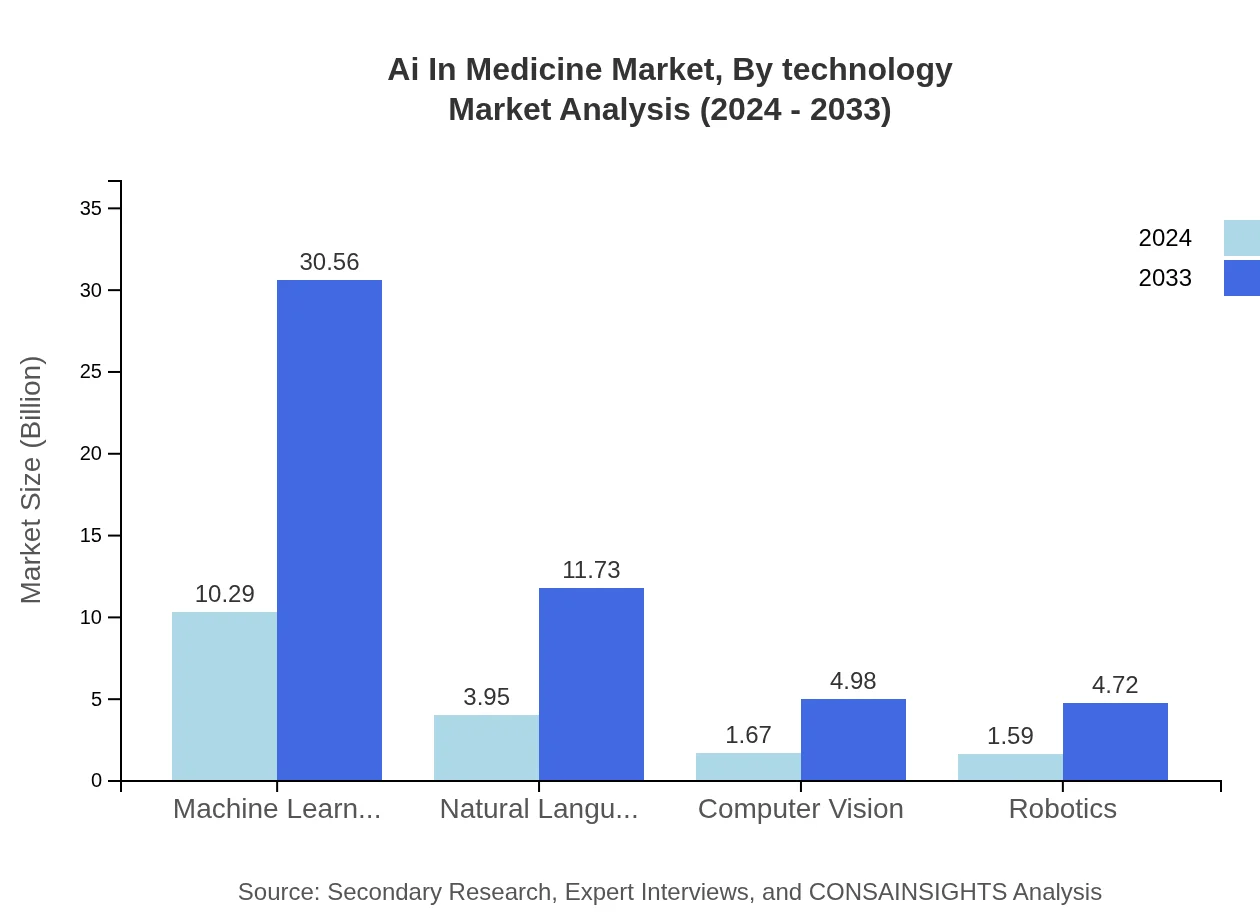
Technological advancements form the backbone of the Ai In Medicine market. In this segment, machine learning dominates with the largest market share due to its extensive applications in predictive analytics, pattern recognition, and decision support systems. Natural language processing is also pivotal in processing unstructured medical data, while computer vision technologies are revolutionizing imaging diagnostics by enabling enhanced detection of anomalies. Robotics plays an increasingly supportive role in surgical procedures and patient care automation. These technological trends are not only enhancing clinical accuracy but are also improving operational efficiency across healthcare facilities. The ongoing innovation in algorithm design and data processing capabilities ensures that AI solutions remain at the forefront of medical advancements, driving both research breakthroughs and practical applications in patient care.
Ai In Medicine Market Analysis By End User
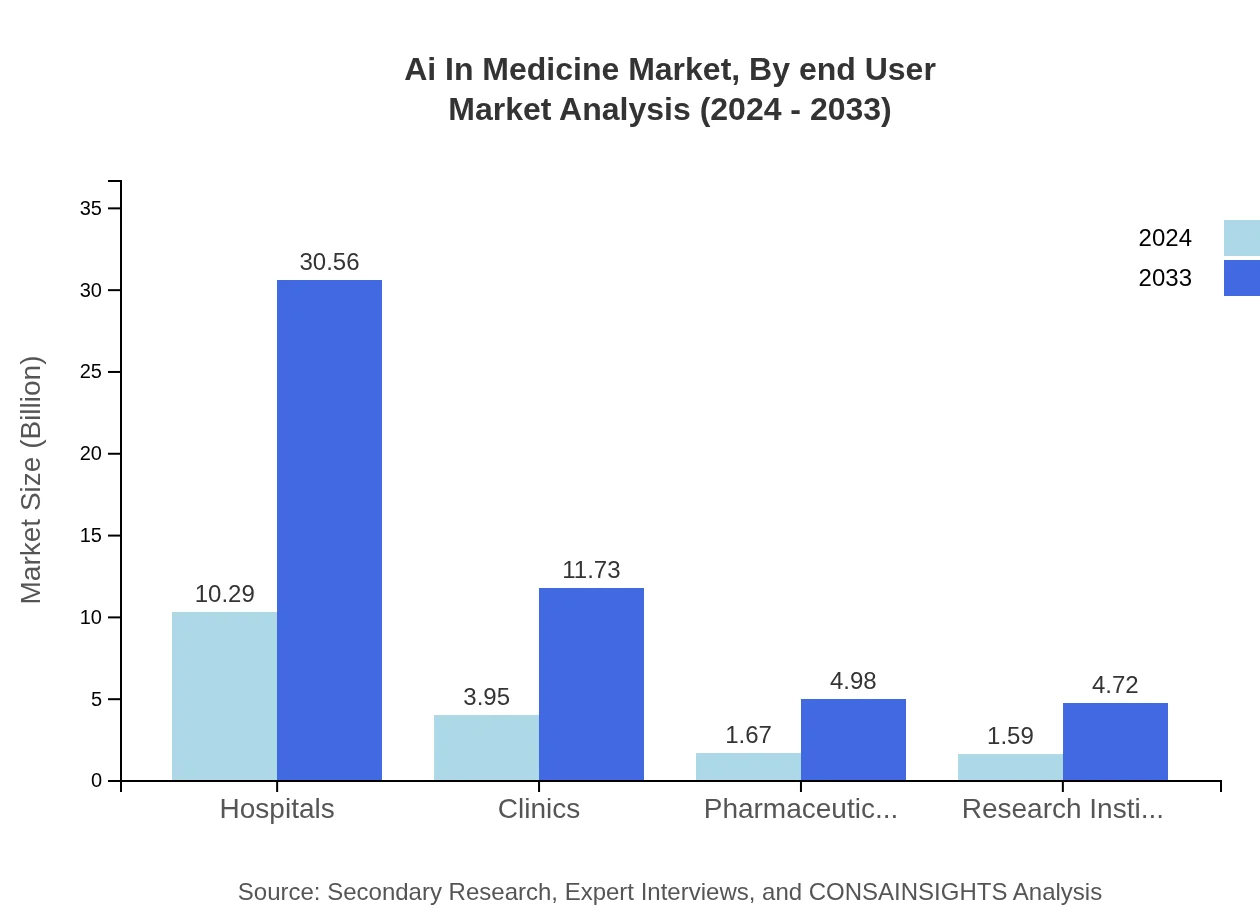
End-user segmentation in the Ai In Medicine market focuses on the diverse groups that benefit directly from AI implementation. Diagnostic centers are capitalizing on AI-driven image analysis to improve early disease detection and accuracy. Treatment applications are benefiting from personalized medicine approaches that utilize patient-specific data to tailor therapy plans, thus enhancing outcomes and reducing side effects. Patient monitoring technologies are being continuously refined to provide real-time insights into patient health metrics, thus enabling timely clinical interventions. Additionally, administrative tasks powered by AI streamline processes and reduce burdens on healthcare staff, thereby improving overall service efficiency. The collective improvements seen in these areas underscore the significant value proposition of AI for end-users, providing both clinical and operational benefits across the healthcare spectrum.
Ai In Medicine Market Analysis By Regulatory Factors
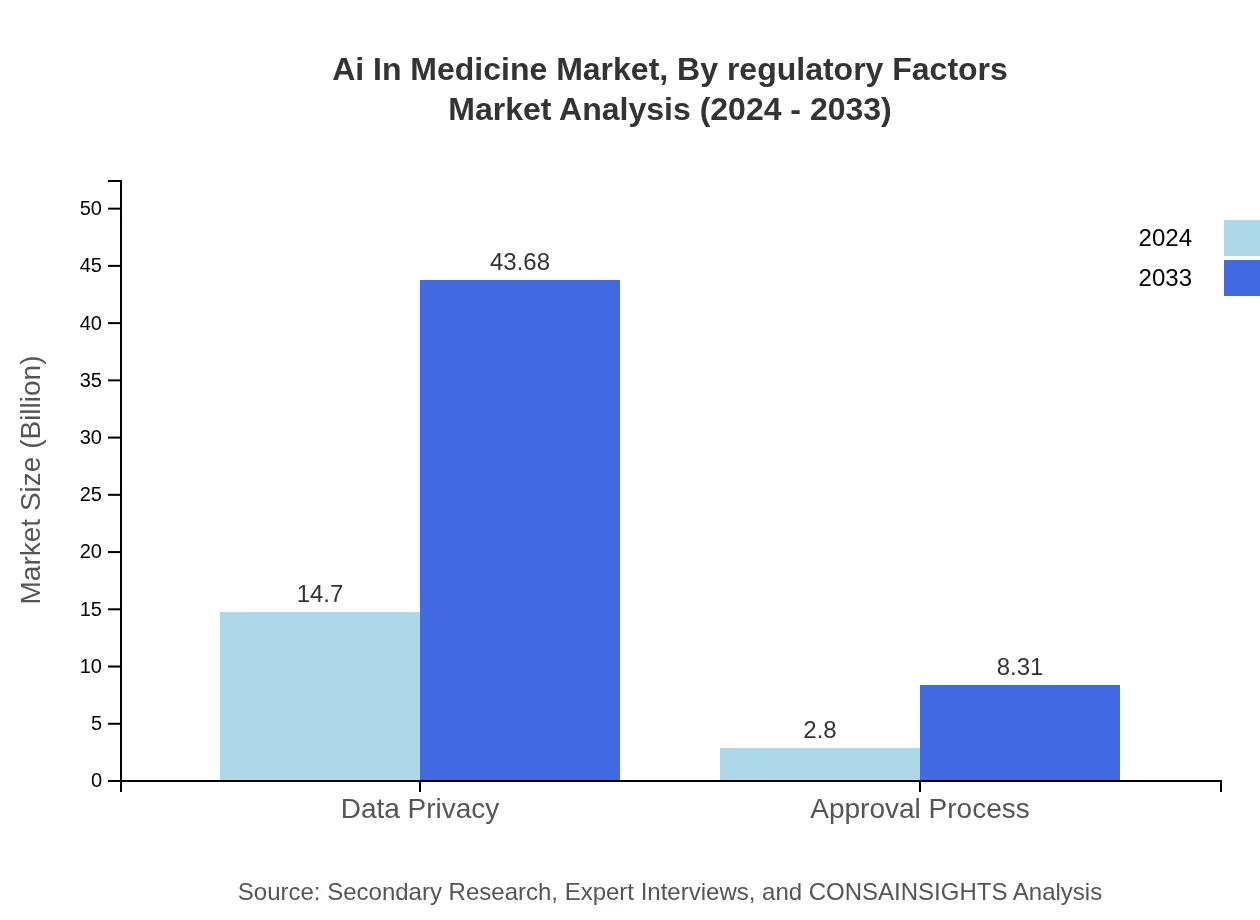
Regulatory factors are profoundly impacting the trajectory of the Ai In Medicine market. With heightened concerns over data privacy, the regulatory landscape has evolved to enforce stricter standards for safeguarding patient information. Approval processes for AI applications are becoming more stringent, ensuring that only safe and effective technologies reach clinical practice. Despite these regulatory challenges, the market benefits from increased investor confidence and accelerated adoption rates as compliance frameworks mature. Clear guidelines not only ensure a higher standard of safety but also facilitate innovation by establishing a robust environment for research and development. As a result, healthcare providers are able to integrate AI solutions more confidently, knowing that these regulatory measures support the overarching goal of delivering high-quality, reliable care.
Ai In Medicine Market Trends and Future Forecast
Tell us your focus area and get a customized research report.
Global Market Leaders and Top Companies in Ai In Medicine Industry
MedAI Innovations:
MedAI Innovations is at the forefront of developing cutting-edge AI platforms tailored for clinical diagnostics and patient management. The company is renowned for its robust algorithms and commitment to enhancing medical accuracy and efficiency through innovative digital health solutions.HealthTech Dynamics:
HealthTech Dynamics leads the market with its integrated AI systems that streamline hospital operations and optimize treatment protocols. The company’s focus on research and technological excellence has made it a pivotal player in driving the adoption of AI-driven healthcare solutions worldwide.We're grateful to work with incredible clients.








FAQs
What is the current market valuation?
The market value is reported at $17.50 Billion for the baseline period. This figure is used as the starting point for the 2024 to 2033 forecast analysis and sizing.
How big is the market expected to be by 2033?
The market is projected to reach $51.99 Billion by 2033, reflecting long-term expansion across technologies, applications, and regional markets during the 2024 to 2033 period.
What is CAGR for the forecast period?
The compound annual growth rate is 12.3% for the 2024 to 2033 forecast period, indicating sustained annual growth driven by technology adoption and expanding use cases.
Why is North America significant in this market?
North America is both the largest and fastest-growing region, supported by substantial clinical and research uptake, established healthcare infrastructure, and investment in AI applications and platforms.
Which technologies are core to market growth?
Core technologies cited include machine learning, natural language processing, computer vision, and robotics, which collectively enable diagnostics, treatment support, monitoring, and administrative automation.
Who are notable companies mentioned in the report?
The report names MedAI Innovations and HealthTech Dynamics as notable companies active in the market, contributing to solution development and competitive dynamics.
What applications are driving adoption?
Primary applications include diagnostics, treatment support, patient monitoring, and administrative tasks, with providers and research organizations deploying solutions across these areas to enhance outcomes and efficiency.
Which end Users are covered in segmentation?
Segmentation covers hospitals, clinics, pharmaceutical companies, and research institutes as primary end-users, reflecting clinical, commercial, and academic adoption pathways.
How do regulatory factors influence the market?
Regulatory considerations such as data privacy and approval process requirements shape product design, compliance costs, and deployment timelines, affecting vendor strategies and adoption rates.
What research methods supported the report findings?
Analysis relied on primary interviews with industry experts, secondary research using company reports and publications, data triangulation, internal validation, and expert-led trend interpretation to ensure robustness.